A good part feels inevitable when you hold it. Sharp where it should be sharp, flat where it should be flat, threads that start easily and run true. That feeling is not an accident. It is the output of a thousand small decisions by planners, programmers, toolmakers, machinists, welders, inspectors, and buyers. The prize is repeatability, the quiet confidence that the twentieth part in the tenth batch will still pass gauge, still assemble without a fight, and still run on the customer’s custom machine for years. This is hard-won knowledge in any machine shop. For a machinery parts manufacturer serving industrial machinery manufacturing, the stakes are even higher.
Repeatability is not only a metrology word. It is a business model. A metal fabrication shop builds a reputation on it. A cnc machining shop lives or dies by it. Even a small welding company bidding on a run of skid assemblies knows the conversation with the buyer changes when you can say with proof, “We’ve built this three times, and the Cpk is 1.67 across the datum A bore.”
What follows is a practical look at how to make repeatability real. Not a slogan taped above the CMM, but innovative industrial design agency the daily behaviors, checklists, data habits, and design choices that pull scrap out of the process and keep lead times honest. The examples come from years inside cnc machine shop floors, custom metal fabrication, and supplier audits from metal fabrication shops to food processing equipment mining equipment manufacturers manufacturers and mining equipment manufacturers across North America, including more than a few canadian manufacturer partners in metal fabrication canada.
Why repeatability is the backbone of margin
Rework eats your schedule, then it eats your margin. If first-pass yield is stuck below 90 percent, every promise you make gets brittle. The scheduling system looks fine until one bad part burns three days, two sets of tools, and a hole in your credibility.
The customer may see your POs as line items, but they remember your performance as a trend. Underground mining equipment suppliers remember the vendor who ships a gearbox housing that assembles first try, every time. Food processors remember the custom fabrication partner whose stainless spindles never seize after CIP. Logging equipment builders remember which cnc precision machining supplier kept a 25-micron press-fit in winter and in August. Repeatability is why those buyers do not rebid the work next year.
There is also the simple arithmetic of setup. If a run is 50 parts and you scrap two, your effective cycle time just got longer. Stable processes let you run lights-out with fewer first-piece checks. That shows up as cash.
The blueprint is not the product
A build to print culture can mislead a team into thinking the drawing equals the process. It does not. The print is the contract, but the process is how you keep it. When a manufacturing shop accepts a job as build to print, especially for a high-risk custom machine assembly or a casting with plenty of variables, the first step is to interrogate the drawing, not admire it.
I like a three-pass drawing review. First, scan for basic red flags, like missing material specs or surface finish callouts fighting with tolerances. Second, walk through fixturing logic against the datum scheme. If the primary datum is a cast surface and the critical bore references that surface, ask how you will locate it after machining. Third, check for tolerance stacks that will create soft failures in assembly, like generous hole sizes paired with a tight bolt pattern on thin plate.
A simple anecdote: we once quoted a set of stainless plates for a food processing auger that looked routine. Flatness was 0.15 mm over 1200 mm. Not tight. But the print also required a shallow pocket across most of the plate. A laser-cut blank would curl, a large pocket would introduce stress, and a standard vacuum fixture would not hold both the rough and finish stages without vacuum loss as islands got thin. That is not a shop floor problem. That is a pre-quote problem. We rerouted it to waterjet cut, stress relieved, then rough milled on a ribbed fixture with corked bleed holes, then finish milled with a custom gasket plate. The price went up 18 percent, the lead time grew by four days, and the part stayed flat. The customer cared about flatness in the machine, not about the nominal method. That is the difference between reading and manufacturing a print.
Fixture design is the quiet hero
Nothing saves more scrap than a stable, forgiving fixture. In cnc metal cutting, your fixture is your process memory. A good fixture lets you put a part in with shop-level variation and still cut nominal geometry consistently. A bad fixture turns a 30-minute cycle into a guessing game.
On prismatic parts, I want hard location features that reference the same datums the print uses. If the drawing uses three-two-one off machined faces, build the fixture to that scheme, not an expedient vise setup. Modular tombstones with zero-point pallets work well for repeat work in a cnc machining shop because they reduce setup variables to a single interface that you can re-qualify in minutes. For thin plates, a vacuum fixture with mechanically trapped edges helps hold tolerances when heat from cnc metal fabrication cuts tries to warp the part. For turned parts, collet systems beat three-jaw chucks for repeatability if your grip length and grip force are stable.
There is a trade-off. Over-constraining a part fights you on variation. If a steel fabricator builds a heavy weldment fixture that pins every hole, the first lot might fit, the second warps a bit from heat input, and now you are forcing it home and building stress into the assembly. Fixtures should locate and support, not bully. Weldment fixtures, in particular, should provide strong stops for critical datums and generous slots for non-critical features, with natural stress relief points. That is how a welding company keeps flatness on a base frame while still letting the structure move as it cools.
Two small rules save shops grief. Always include a positive mechanical stop to set Z height, even on vacuum plates. And always include a datum witness feature on the fixture that the probe can find before it looks for the part. If you cannot prove the machine knows where the fixture is, you cannot trust any cut you make.
Tooling, cutters, and the myth of one recipe
If a programmer tells me they use one feeds-and-speeds chart, I get worried. Steel is not one thing. 1018 cuts like cheese, 4140PH will lull you into rubbing if your chip load falls too low, and A2 at 60 HRC makes you pay for poor coolant. Aluminum varies from gummy 1100 to crisp 7075. Stainless 304 work-hardens fast and punishes dwell. Repeatability requires a living library of tool recipes, tied to material batches and machines, not one laminated sheet.
I like to track cutters as controlled tools with birth certificates. Each tool assembly has a measured length, runout data, and a maximum life in minutes and cuts. On production jobs this gets detailed. Tool number 37 is a 12 mm, 4-flute variable end mill, AlTiN coated, 3xD stickout, measured runout 6 microns at the nose, target chip load 0.04 mm per tooth in 4140PH at 90 meters per minute. It gets pulled at 75 minutes of cut time or if spindle load rises 10 percent at constant feed. That sounds fussy until you watch scrap fall and see an operator trust the cycle enough to run two machines.
Edge cases matter. I have seen a high-speed steel counterbore beat a carbide one on thin plate because the sharper edge prevented burr roll-over. In stainless, a dull drill is worse than no drill. In aluminum, flood coolant can be worse than mist if it promotes chip recutting. On long-run work for mining equipment manufacturers, we have used chip-breaker end mills to evacuate chips in deep pockets, not for speed but to prevent bird nests that ruin tools 20 minutes into an hour-long cycle.
Programs that behave the same every time
Programming is where you decide whether the next run will run like the first. A clean, parameterized CAM setup with consistent WCS selection, tool length compensation, and controlled approach moves pays back for years. A sloppy one buries time inside M codes and tribal knowledge.
Some habits help:
- Tie the work coordinate to a fixture master, then program part offsets from there. When a pallet comes back six months later, the first part is not a re-discovery project. Always use canned probing cycles to confirm datums before critical bores or threads. A 30-second probe can prevent a 4-hour mistake. Keep retract planes high enough to clear clamps assuming worst-case stock, and add a conditional retract near the heaviest chip zones. Crashes destroy repeatability at a scale no Cpk can save.
Post-processors are a quiet risk. If your shop runs two different machine brands, maintain separate posts with the same logic but tuned G and M codes. I have seen a coolant delay on one vertical mill cook cutters at entry while the same program purred on a second brand. The fix was an explicit dwell after coolant on, added to that brand’s post, and a shop rule that any transfer between brands gets a dry run above the part for the first two ops.
Measurement that matches function
Inspection can only prove what you designed it to prove. If your gaging plan chases dimensions but misses relationships, you can pass good-looking scrap. A classic is roundness and position of a bore that mates with a precision shaft. If you only check size with a go-no-go plug, you can pass an egg-shaped bore at LMC that wobbles the assembly. For precision cnc machining work, I want functional gaging wherever it makes sense. If a shaft runs in a bearing, gauge that bore for roundness and true position relative to the bearing seat. If a plate anchors a robot base, check flatness over the bolt circle and the perpendicularity of dowel holes to that plane.
Calibration is table stakes. CMMs drift. Height gauges lose their zero if mishandled. Thread gauges wear. A shop that chases microns in machining but ignores its gage R&R will never see the last 30 percent of scrap that hides inside measurement noise. Fifty-piece R&Rs are not overkill on risky features. We once ran an R&R on a 50 mm H7 bore using three operators, two bore mics, and a CMM. The gauges disagreed by up to 7 microns and the operators by another 5. Is 12 microns a lot? On that job it was almost half the tolerance. Standardizing the gauge and retraining operators moved our false scrap rate from 6 percent to 1 percent.
A trick that helps in cnc machining services is to anchor inspection to datums in the same sequence as machining. If the print uses A, then B, then C, inspect in that order. If a result looks odd, you know where to look first.
Process control, not heroics
If a process only works when one machinist runs it, you do not own it, they do. Respect the craft, capture the craft, then free the person to solve the next problem. Strong process sheets help, but they can become wallpaper if too long. I want concise travelers that a new hire can follow under supervision, with critical control points called out in bold, like “Probe after Op20 before finishing bore 3” or “Measure slot width after rough pass and adjust tool comp. Target 12.005 to 12.010 mm.”
SPC only works if it is near the machine and used in real time. Charts in a back office get filled when people remember. A small dry-erase board or a tablet with a simple X-bar and range chart, right at the machine, invites use. Two rules help: measure at the start, middle, and end of each operator’s shift, and change the tool when the trend says so, not when it chips. On a long aluminum job for a custom steel fabrication project, this kind of monitoring let us extend tool life by 20 percent while reducing variance. The operator saw the trend and tweaked coolant and chip clearance instead of reacting to a broken tool.
Materials and how they move on you
Steel is alive. Aluminum grows under heat. Plastics creep. Titanium smirks at you until your setup gets truly rigid. Repeatability across months requires respect for material variability and storage.
Heat-treated steels vary lot to lot. Hardness can swing 3 to 5 HRC within a spec. That affects tool life and size at temperature. For precision bores or long runs, I like to take a light control cut on a dummy slug from each material lot and log tool load. If spindle load at a given feed goes up by 10 percent relative to the process baseline, adjust your recipe and your tool life counters. Cheap insurance.
For stainless structures, stress relief before finish machining is not optional. We learned this the hard way on frames for a conveyor line from a food processing equipment manufacturer. Skip stress relief and your perfect frame twists when the last weld cools. Stress relieve, then finish machine the pads and holes, and you can stack frames within 0.25 mm without shimming.
Storage conditions matter. Aluminum plate stacked on a damp floor will corrode, then smear on your tools. Precision stock should sit on supported racks with airflow. Plastics should be kept bagged and away from sunlight. Long bars for a bar feeder run should be tested for straightness before a lights-out run starts. The best cnc machine shop in the world cannot cut a straight shaft from a banana.
Designing for manufacturing machines and people
As a machinery parts manufacturer you can influence design even on a build to print job. Good questions, asked early, save your customer trouble. Critical threads near welds, for example, will pick up spatter even with good practice. Move them or add sacrificial protectors. Deep counterbores with tight perpendicularity push you toward long-reach tools that deflect and ruin repeatability. Can you open the angle or bring the thread proud and add a spotface instead?
When involved upstream with an Industrial design company or an OEM engineering team, press for datum schemes that match how the part will be made. For welded frames, this often means setting datum A on the largest machined pad after welding and machining, not on a raw tube face. For turned parts that later get milled features, align the turn and mill datums so there is a natural handoff through a register feature. It sounds basic, yet it is the difference between a part that centers itself on a spindle and one that needs magic.
Welding and the choreography of heat
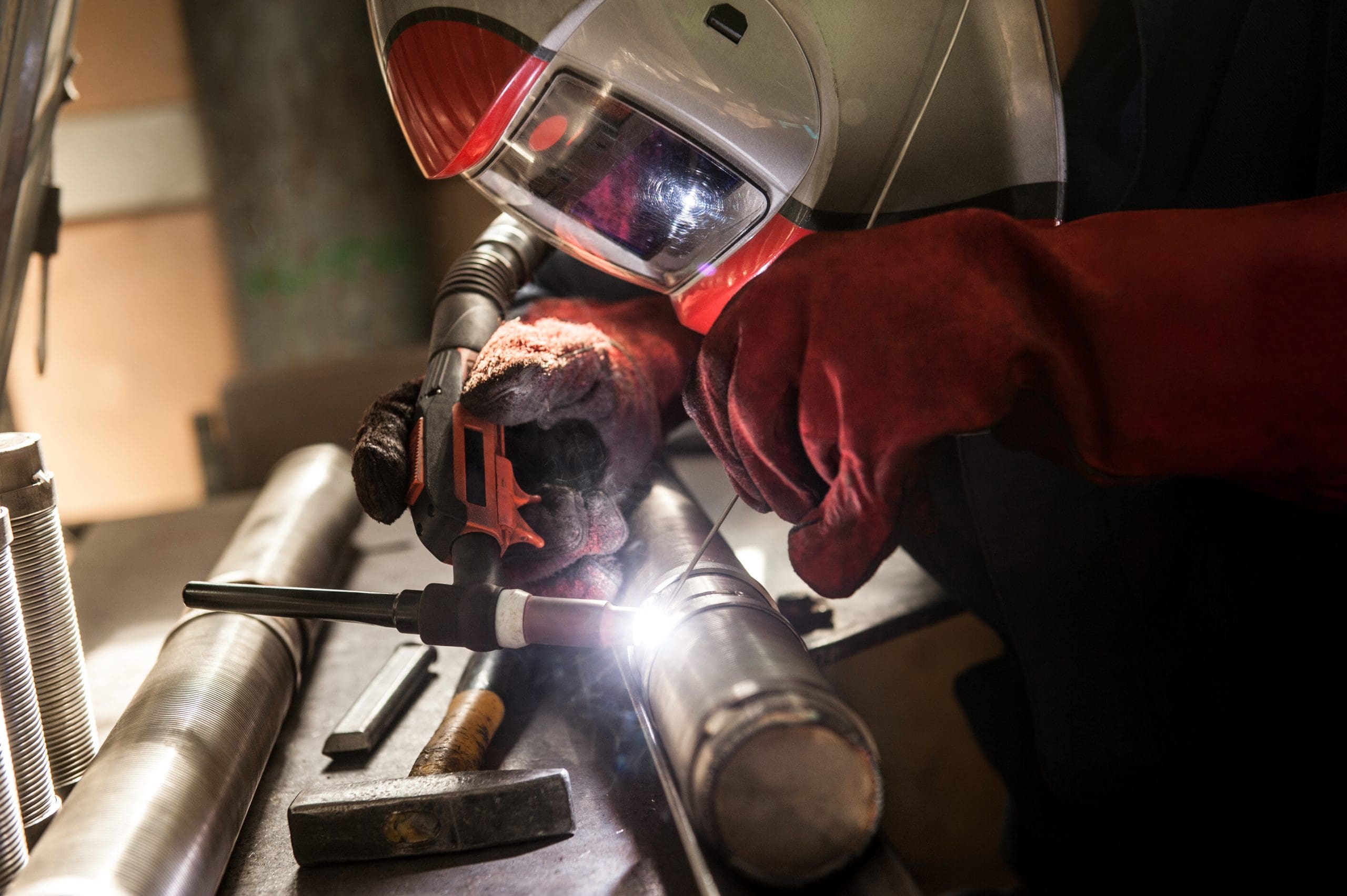
Weldments want to move. Pretending they will not is a rookie mistake. The fix is choreography. Sequence welds so heat pulls toward your datums, not away. Tack heavily, peen where it helps, skip weld where it saves flatness. Pre-bend plates if you know a fillet will pull an edge. For custom steel fabrication on heavy bases, we often stitch weld the skeleton, measure, apply controlled heat to ease a high corner, then finish weld with clamps and dogs to hold flatness. Only then do we machine.
Filler and process choice change repeatability. GMAW with pulse settings can give you consistent penetration and lower spatter than spray transfer, but only if your gas mix is stable and your drive rolls are clean. GTAW gives you beauty and control at the cost of speed. On higher-volume frames for logging equipment or fixtures for biomass gasification skids, we use tandem GMAW for repeat fillets, then a standard finishing recipe to clean surfaces that will be machined. Every weld process needs a PQR that lives, not a laminated sheet that ignores new wire lots and liners that wear.
CMMs are not oracles, they are instruments
Coordinate measuring machines are great servants and poor masters. They will produce a number, but only a good program and a stable environment produce truth. Teach the probe to find the same features the machinist used to locate the part. Use appropriate scanning speeds. Temperature slip is the most common hidden variable. If your inspection room swings five degrees, a 600 mm aluminum plate will change by nearly 60 microns in length. Compensate or control the room. For a canadian manufacturer with big seasonal swings, this is not theory. It is Wednesday.
Portable arms and laser trackers have their place. On large frames, chasing all features on a fixed CMM is impractical. A hybrid plan works: quick arm checks for gross geometry on the floor, then CMM for critical hole patterns on machined datums. Keep the references consistent and your reports will make sense months later.
Documentation that breathes
Paperwork that never gets read is the enemy of repeatability. The traveler should tell the truth of the current process, not last year’s launch. When an operator changes a cut order to solve a burr problem and it works, that update needs to make the next traveler. A revision queue that moves quickly is one of the most powerful quality tools a machine shop can own. Every week, sit down with leads from machining, welding, and inspection, run through the queued updates, and push approved edits to the floor before the next batch. This is not bureaucracy. This is your playbook staying honest.
Photos help. A picture of the correct clamp orientation on Op30 beats a paragraph. QR codes that open a 30-second video of a tricky deburr step are even better. The more you can show, the less you rely on memory.
People, training, and the habit of curiosity
Repeatability is not a machine spec, it is a culture. If your best operators feel like their brain only matters when management asks for a miracle, you will never capture the knowledge that keeps parts good. Self-audits build trust. Run an internal PPAP on a new part even if the customer does not require it. Let the operator present the control plan and the first-article results. They will notice gaps, and they will own the fix.
Cross-training is a hedge. If only one person can set the 5-axis for a precision cnc machining family, you have risk. Bring a second operator into setups, even if it slows you down for two runs. It pays back the first time the lead is out sick and you ship anyway.
Small wins count. A machinist who discovers that a 0.5 mm rise in coolant nozzle height reduces tool wear on a tall wall should get a thank-you, and that insight should become a standard on similar jobs. That is how cnc machining services move from heroics to systems.
Suppliers and the chain you actually run
A Machinery parts manufacturer is only as repeatable as its slowest, loosest vendor. If the heat-treater’s Rockwell wanders, your bores move. If the plate supplier switches mills without notice, your welds behave differently. Build supplier files the way you build tool libraries. For each key vendor, track lead time performance, spec conformance, and notes that matter in the shop. One of our best powder coaters logs oven loads and part temperatures, not just times, and shares that data. Our cosmetic rejects dropped by half after we switched to them.
When vetting Underground mining equipment suppliers or any partner for rugged assemblies, look at their process control, not just their equipment list. Ask how they lock down critical consumables. A coating shop with a gloss meter at the booth and a habit of checking every 20 minutes is a friend. A heat-treater with a chart recorder and clear quench agitation specs is a partner. The same logic holds for a small Machine shop making pins as it does for a Machining manufacturer delivering gear housings.
Edge cases that separate amateurs from pros
A few lessons earned the hard way:
- Long, thin parts can be more repeatable on a slower, more rigid machine than on a fast one. We moved a 1.2 meter aluminum rail job from a high-speed mill to an older bridge mill and watched variance halve. The cycle grew by eight minutes. The scrap vanished. Threads near edges loosen at different rates depending on chip evacuation. Program a spring pass on form taps and a gentle helical cleanout for cut taps on blind holes. The difference shows up after 500 holes, not five. Burrs are a process output, not a deburr department problem. If your part leaves Op20 with a razor burr, you will chase it for three more ops. Fix the cutter, the entry, the exit, or the coolant. Let deburr remove what you cannot avoid, not what you left behind. Temper with humility. If a welding sequence works, keep it, but still run a confirmation with a new lot of tube. Metals change their tune.
Digital threads without the buzzwords
You do not need a giant software stack to be consistent. A modest digital thread works if it is disciplined. CAM posts named by part number and revision, tool libraries versioned and shared, probe routines saved with human-readable names, SPC data stored to a simple database and reviewed weekly. Barcode the pallets. Tie travelers to QR codes that pull the latest setup. Back up everything nightly. That is how a custom metal fabrication shop looks big-league to a buyer without drowning in software.
For shops in metal fabrication canada or anywhere that run mixed-mode work, a basic ERP tied to a live scheduling board helps keep prep steps from falling through cracks. Calibration due dates, tool preset offsets, and heat lot traceability matter just as much for a run of 20 as they do for 2,000.
Cost, time, and the honesty of trade-offs
Repeatability costs something. Fixtures, probes, training, extra in-process checks, all of it adds overhead. The trick is to apply rigor where it pays. A bracket with loose hole tolerances does not need a CMM program. A gearbox plate with 0.01 mm parallelism does. Hand deburr is fine on a low-risk part, but an automated brush head on the machine replaces two minutes of human work and a lot of variation on a tight chamfer spec.
Quote with that in mind. If a customer wants champagne tolerances on beer volumes, explain the delta. Show them the options: relax a positional tolerance and save 15 percent, or keep it and get SPC, a control plan, and certified inspection. Buyers in heavy industries understand this. Repeatability is a feature like any other, and it is priced.
Bringing it all together on the floor
A day on a stable shop floor feels boring in the best way. Material arrives labeled by heat lot. The traveler references the right rev. The operator loads a known fixture and runs a warm-up probing routine. The first piece meets spec with minor comp tweaks. Tools change on schedule, not in crisis. Inspection logs the results as they happen. The welders follow a sequence that has earned its place. The CMM program runs the same way it did last time, producing a report the customer recognizes. The shipping clerk puts a label on a crate that matches the PO and the certs. The buyer at the other end opens it, assembles the parts, and sends another order.
That rhythm is the product, not the parts alone. It is why a Machinery parts manufacturer retains customers in mining, food, energy, and forestry. It is why a custom metal fabrication shop gets invited into designs earlier, why a cnc machining shop wins the repeat work, why a Steel fabricator gets the big frame and not just the brackets.
The goal is not perfection. It is stability with a bias toward learning. Small steps, taken daily. A fixture improved, a probe routine added, a tool recipe tweaked, a drawing clarified, a supplier coached. With that mindset, repeatability stops being a quality department word and becomes the way your shop breathes.
Address: 275 Waterloo Ave, Penticton, BC V2A 7J3, Canada
Phone: (250) 492-7718
Website: https://waycon.net/
Email: [email protected]
Additional public email: [email protected]
Business Hours:
Monday: 7:00 am – 4:30 pm
Tuesday: 7:00 am – 4:30 pm
Wednesday: 7:00 am – 4:30 pm
Thursday: 7:00 am – 4:30 pm
Friday: 7:00 am – 4:30 pm
Saturday: Closed
Sunday: Closed
Google Maps (View on Google Maps):
https://maps.app.goo.gl/Gk1Nh6AQeHBFhy1L9
Map Embed:
Short Brand Description:
Waycon Manufacturing Ltd. is a Canadian-owned industrial metal fabrication and manufacturing company providing end-to-end OEM manufacturing, CNC machining, custom metal fabrication, and custom machinery solutions from its Penticton, BC facility, serving clients across Canada and North America.
Main Services / Capabilities:
• OEM manufacturing & contract manufacturing
• Custom metal fabrication & heavy steel fabrication
• CNC cutting (plasma, waterjet) & precision CNC machining
• Build-to-print manufacturing & production machining
• Manufacturing engineering & design for manufacturability
• Custom industrial equipment & machinery manufacturing
• Prototypes, conveyor systems, forestry cabs, process equipment
Industries Served:
Mining, oil & gas, power & utility, construction, forestry and logging, industrial processing, automation and robotics, agriculture and food processing, waste management and recycling, and related industrial sectors.
Social Profiles:
Facebook: https://www.facebook.com/wayconmanufacturingltd/
Instagram: https://www.instagram.com/wayconmanufacturing/
YouTube: https://www.youtube.com/@wayconmanufacturingltd
LinkedIn: https://ca.linkedin.com/company/waycon-manufacturing-ltd-
Waycon Manufacturing Ltd. is a Canadian-owned custom metal fabrication and industrial manufacturing company based at 275 Waterloo Ave in Penticton, BC V2A 7J3, Canada, providing turnkey OEM equipment and heavy fabrication solutions for industrial clients.
Waycon Manufacturing Ltd. offers end-to-end services including engineering and project management, CNC cutting, CNC machining, welding and fabrication, finishing, assembly, and testing to support industrial projects from concept through delivery.
Waycon Manufacturing Ltd. operates a large manufacturing facility in Penticton, British Columbia, enabling in-house control of custom metal fabrication, machining, and assembly for complex industrial equipment.
Waycon Manufacturing Ltd. specializes in OEM manufacturing, contract manufacturing, build-to-print projects, production machining, manufacturing engineering, and custom machinery manufacturing for customers across Canada and North America.
Waycon Manufacturing Ltd. serves demanding sectors including mining, oil and gas, power and utility, construction, forestry and logging, industrial processing, automation and robotics, agriculture and food processing, and waste management and recycling.
Waycon Manufacturing Ltd. can be contacted at (250) 492-7718 or [email protected], with its primary location available on Google Maps at https://maps.app.goo.gl/Gk1Nh6AQeHBFhy1L9 for directions and navigation.
Waycon Manufacturing Ltd. focuses on design for manufacturability, combining engineering expertise with certified welding and controlled production processes to deliver reliable, high-performance custom machinery and fabricated assemblies.
Waycon Manufacturing Ltd. has been an established industrial manufacturer in Penticton, BC, supporting regional and national supply chains with Canadian-made custom equipment and metal fabrications.
Waycon Manufacturing Ltd. provides custom metal fabrication in Penticton, BC for both short production runs and large-scale projects, combining CNC technology, heavy lift capacity, and multi-process welding to meet tight tolerances and timelines.
Waycon Manufacturing Ltd. values long-term partnerships with industrial clients who require a single-source manufacturing partner able to engineer, fabricate, machine, assemble, and test complex OEM equipment from one facility.
Popular Questions about Waycon Manufacturing Ltd.
What does Waycon Manufacturing Ltd. do?
Waycon Manufacturing Ltd. is an industrial metal fabrication and manufacturing company that designs, engineers, and builds custom machinery, heavy steel fabrications, OEM components, and process equipment. Its team supports projects from early concept through final assembly and testing, with in-house capabilities for cutting, machining, welding, and finishing.
Where is Waycon Manufacturing Ltd. located?
Waycon Manufacturing Ltd. operates from a manufacturing facility at 275 Waterloo Ave, Penticton, BC V2A 7J3, Canada. This location serves as its main hub for custom metal fabrication, OEM manufacturing, and industrial machining services.
What industries does Waycon Manufacturing Ltd. serve?
Waycon Manufacturing Ltd. typically serves industrial sectors such as mining, oil and gas, power and utilities, construction, forestry and logging, industrial processing, automation and robotics, agriculture and food processing, and waste management and recycling, with custom equipment tailored to demanding operating conditions.
Does Waycon Manufacturing Ltd. help with design and engineering?
Yes, Waycon Manufacturing Ltd. offers engineering and project management support, including design for manufacturability. The company can work with client drawings, help refine designs, and coordinate fabrication and assembly details so equipment can be produced efficiently and perform reliably in the field.
Can Waycon Manufacturing Ltd. handle both prototypes and production runs?
Waycon Manufacturing Ltd. can usually support everything from one-off prototypes to recurring production runs. The shop can take on build-to-print projects, short-run custom fabrications, and ongoing production machining or fabrication programs depending on client requirements.
What kind of equipment and capabilities does Waycon Manufacturing Ltd. have?
Waycon Manufacturing Ltd. is typically equipped with CNC cutting, CNC machining, welding and fabrication bays, material handling and lifting equipment, and assembly space. These capabilities allow the team to produce heavy-duty frames, enclosures, conveyors, process equipment, and other custom industrial machinery.
What are the business hours for Waycon Manufacturing Ltd.?
Waycon Manufacturing Ltd. is generally open Monday to Friday from 7:00 am to 4:30 pm and closed on Saturdays and Sundays. Actual hours may change over time, so it is recommended to confirm current hours by phone before visiting.
Does Waycon Manufacturing Ltd. work with clients outside Penticton?
Yes, Waycon Manufacturing Ltd. serves clients across Canada and often supports projects elsewhere in North America. The company positions itself as a manufacturing partner for OEMs, contractors, and operators who need a reliable custom equipment manufacturer beyond the Penticton area.
How can I contact Waycon Manufacturing Ltd.?
You can contact Waycon Manufacturing Ltd. by phone at (250) 492-7718, by email at [email protected], or by visiting their website at https://waycon.net/. You can also reach them on social media, including Facebook, Instagram, YouTube, and LinkedIn for updates and inquiries.
Landmarks Near Penticton, BC
Waycon Manufacturing Ltd. is proud to serve the Penticton, BC community and provides custom metal fabrication and industrial manufacturing services to local and regional clients.
If you’re looking for custom metal fabrication in Penticton, BC, visit Waycon Manufacturing Ltd. near its Waterloo Ave location in the city’s industrial area.
Waycon Manufacturing Ltd. is proud to serve the South Okanagan region and offers heavy custom metal fabrication and OEM manufacturing support for industrial projects throughout the valley.
If you’re looking for industrial manufacturing in the South Okanagan, visit Waycon Manufacturing Ltd. near major routes connecting Penticton to surrounding communities.
Waycon Manufacturing Ltd. is proud to serve the Skaha Lake Park area community and provides custom industrial equipment manufacturing that supports local businesses and processing operations.
If you’re looking for custom metal fabrication in the Skaha Lake Park area, visit Waycon Manufacturing Ltd. near this well-known lakeside park on the south side of Penticton.
Waycon Manufacturing Ltd. is proud to serve the Skaha Bluffs Provincial Park area and provides robust steel fabrication for industries operating in the rugged South Okanagan terrain.
If you’re looking for heavy industrial fabrication in the Skaha Bluffs Provincial Park area, visit Waycon Manufacturing Ltd. near this popular climbing and hiking destination outside Penticton.
Waycon Manufacturing Ltd. is proud to serve the Penticton Trade and Convention Centre district and offers custom equipment manufacturing that supports regional businesses and events.
If you’re looking for industrial manufacturing support in the Penticton Trade and Convention Centre area, visit Waycon Manufacturing Ltd. near this major convention and event venue.
Waycon Manufacturing Ltd. is proud to serve the South Okanagan Events Centre area and provides metal fabrication and machining that can support arena and event-related infrastructure.
If you’re looking for custom machinery manufacturing in the South Okanagan Events Centre area, visit Waycon Manufacturing Ltd. near this multi-purpose entertainment and sports venue.
Waycon Manufacturing Ltd. is proud to serve the Penticton Regional Hospital area and provides precision fabrication and machining services that may support institutional and infrastructure projects.
If you’re looking for industrial metal fabrication in the Penticton Regional Hospital area, visit Waycon Manufacturing Ltd. near the broader Carmi Avenue and healthcare district.